
Skip to content


The Lesser of Two Evils Public Safety Dept. VS. Privatized Fire Dept.

10 comments

We (firefighters) know that you just cannot beat a tried and true fire department. It is what works for our citizens. A fire department encompasses training, experience, knowledge, tradition, pride, ownership, bravery, determination, brotherhood, and is an all around well oiled machine.

However, none of that compares to the almighty dollar!

This day in age, the beancounters don’t care. All they care about is saving money by cutting fire department funding because they cannot equate our work to anything. Hell, even our Fire Chiefs help them by offering biased statistics that skew to the beancounters benefit.

The beancounters have turned to unconventional ways of replacing their fire departments with cheap and ineffective fire service. This after slashing fire departments to an all time low in relation to staffing, companies, stations, and everything else. Now they just get rid of us…

Public Safety Departments
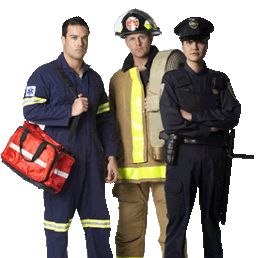
Can one person do all of this? image from fitsupply.com

The public safety department concept is ineffective and an unsafe money saving option that I just cannot wrap my head around. This is just too much responsibility for one person to do well.

Public safety departments are those which employ public safety officers who are police officers, firefighters, and paramedics. This system is not very popular or widely used in the States.

I say it is ineffective because there are too many “what ifs?”. Who does what? Firefighters rely on the understanding of the public that we are not armed and do not uphold the law in the same sense of a police department. We stay out of conflict and allow police officers to handle that business. Police officers and firefighters have their own skill sets and are masters of what they do. To throw up police, fire, and EMT certifications/training up in the air and expect someone to master them all is not fair or obtainable.

If indeed it were that easy, then I say City Managers should also do refuse collection and cut grass!

At the very least, be your own secretaries! Is that asking too much?

Look at Kalamazoo, Michigan…in 1982, they took 164 firefighters and 219 police officers and cross-trained them to end up with 383 public safety officers. Now they have cut their staffing to 243 public safety officers. What the hell is that all about?

My City is only a little bigger than Kalamazoo and we have 240 firefighters alone. Then again, our most recent past Fire Chief was 2nd in command in Kalamazoo. He was the hatchet man in Roanoke and cut our department as the City wanted it.

Michigan has many public safety departments. There are more localities thinking about going to the model now. They view it as a huge cost saving option. Who cares about service delivery! LET’S SAVE SOME MONEY!!!! YEAH!

Jackson, Michigan officials are trying to follow the leader of neighboring areas and hoping to create a public safety department. Read the articles linked below. Everything is about the money…nothing about service delivery. It is blatantly obvious that the officials in Jackson have no idea what we do, how we do it, and why we do it!

Let’s just say this…if it were such a great idea then everyone would be doing it!

The mindset of officials is unfortunate:

It reflects the changing nature of the fire profession, he said. Of the 94,000 calls for service, only 1,100 were fire related, Hadley said. Advances in fire prevention, technology and building codes reduces the amount of fires. Hadley respects firefighters and their profession, but it is changing.

“It’s a very expensive insurance policy,” he said. “You can’t continue to pay them to sit in the fire station 98 percent of the time.

Read the entire article here

More articles here:

Privatized Fire Service

I think you can pretty much some it up with the comment “You get what you pay for”.

Fire Departments don’t have a corporate CEO who gets richer when the employees are forced to do less with more, meet the minimum expectations, and offer the bare minimum of service.

While I have not worked for a private contracted fire service. I have worked for a private EMS agency in a system status management style of delivery…it sucked. It sucked because it was the bare minimum and while we raced from call to call to meet the needs of our customers, the corporate CEO was sitting back sipping mojitos in his mansion and didn’t give a shit about the customers!

That is where the biggest difference exists. We care. We understand. Our “customers” are our neighbors.

You get what you pay for.

We might cost more…but I assure you, we aren’t getting rich.

We are paid for our knowledge, our experience, our bravery, and our determination.

How many people do you know who would be willing to give up their life so that you might live….for $10 an hour…or even minimum wage? Not me…I would rather be a Wal Mart greeter! That can’t be nearly as stressful of a job…and it probably pays $10 an hour!

It is very disturbing that localities are willing to disband their fire department for a privately contracted fire service to save money but they aren’t willing to cut the budgets of other non-critical departments and programs.

If it has really gotten to the point of contracting your fire service, then trash pick-up, libraries, parks and recreation, lawn cutting, paving, and everything else should also be contracted services….and then they can contract out the person who made the decision in the first place!

What do you think?

I say you can keep both of them…neither are viable options!

Comment using Facebook here or comment the old fashioned way below

Facebook Comments

10 Comments

  1. Coalfire says

    Rhett, I have worked for a private fire dept. Let me tell you brother it sucked. You had no backing what so ever. At least in the public sector the general public will sometimes go to bat for you, if you are doing a good job.

    on April 28, 2011 @ 1:27 pm. Reply
  2. FireCap5 says

    You want a truly messed up situation? Work in a private public safety department. I did for a number of years at a steel mill.

    It was a disaster, so much so that we coined the phrase “We’re not trained but we try hard!” Pay was pitiful, PPE was subpar and we were treated poorly on a daily basis.

    But oh man, what blog fodder it is!!

    on April 29, 2011 @ 5:23 pm. Reply
  3. Andy says

    Do you have any facts or data to show that either of these models results in poorer service delivery? Until you do, you’re going to have a very hard time convincing anyone except IAFF members that these are bad ideas. It’s the responsibility of elected officials to provide required services at the best cost to taxpayers. They’d be delinquent in their duties if they don’t look at other options to get the same thing for less money. Your argument is that these models don’t provide the same level of service, but without proof, it seems like hollow union rhetoric. The public safety model seems to be working in Michigan. Elected officials and the public aren’t concerned about the working environment for the employee, they’re concerned about results. If the working environment sucks, good people won’t work there and they’ll have to improve the working environment (pay, benefits) to get the results they want. Like anything else, it’s a risk-benefit equation that needs to be worked out. A dedicated fire department can commit more time to training for that specific task, but is it necessary to have the best of everything? Some communities may be ok with having a slightly lower level of capability if it saves money and the risk is deemed acceptable. And saying that that’s putting money before public safety is irrelevant. That line between money and public safety is always there. If it weren’t we wouldn’t have any volunteer fire departments. It’s all just a matter of where that line gets drawn, and it’s up to each community to draw it where they see fit. Maybe these communities will get what they pay for, but maybe they’re ok with that. Don’t demonize them for it, it’s their choice.

    on April 30, 2011 @ 3:57 am. Reply
  4. CBEMT says

    There is one “private” fire department in my area, but their name is the same as the town and they are IAFF so nobody really notices. They’re shortstaffed, but so’s everybody.

    on April 30, 2011 @ 4:40 am. Reply
  5. Hallway Sledge says

    Specifically to Andy. I only have experience with one PSD but it was the department that neighbored my own. I say was because less than two years after becoming a PSD they abandoned it and went back to being a dual-role Fire/EMS provider. One story should suffice.

    An accident with severe injury and entrapment on the border of both agencies response districts. The PSD arrives first with a whole lot of police cars and a single Tower Ladder, which carried the extrication equipment. It was determined that the accident was in my agency’s area so a full pin-in alarm was dispatched; Battalion Chief, Ambulance, Engine, Heavy Rescue. Upon the B/C’s arrival the PSD officers had successfully popped the driver’s side door, then proceeded to stand there. The entrapment required much more than merely popping a door and there was no medical treatment going on at all. The PSD officers had no idea how to continue the extrication past the most basic operation. I have a wonderful picture in my personal archives of every single PSD officer standing around doing nothing watching the medevac helicopter landing while the entire compliment of my agency’s members are surrounding the car and working, not a single one looking at anything other than the task at hand. The patient was successfully removed and taken by the helicopter to a trauma center where they made a recovery. Had the accident occurred in the PSD’s jurisdiction I have grave misgivings that the end-result would have been the same.

    As professional firefighter/paramedics (my agency), we are required to know about and be proficient in firefighting, hazardous materials, technical rescue, extrication, water rescue, emergency medical treatment to the paramedic level as well as a myriad of other technical information regarding all of the equipment used to perform those actions. I believe I am of above average intelligence, slightly, and so are most of the firemedics I work with. But now you want to send me to school to learn all of the applicable laws of my state, police procedures, firearms training, evidence collection, officer safety etc. etc.? Something will have to give. There is absolutely no way anyone will be as proficient as one needs to be in every aspect of each job. It’s just too much. Not to mention I have no desire to learn those subject areas or I would have become a police officer in the first place, so if my heart isn’t in it how much dedication do you think I’m going to show towards it. I know what yours and others of the same mindset will be, “Then you better be ready to look for another job and we’ll hire people who are willing to show that much desire.” It’s not that simple, go back to the proficiency part of my statement.

    on April 30, 2011 @ 9:04 pm. Reply
    • Andy says

      Sledge,

      I understand what you’re saying, but my point is that if a community is willing to trade proficiency for cost, that’s their choice to make, not ours. It’s not inherently bad or evil to not be able to provide the “best of the best” all the time. Like it or not, it comes down to money and what the public is able and/or willing to fund. A small rural volunteer department can’t provide FDNY levels of service, and a PSD may not be able to provide the same level of proficiency and service as dedicated PDs and FDs, but if that service is “good enough” for the taxpayers in that district, so be it. If I live in that district and am unhappy with the competency or level of service available I take it up with my elected officials to prompt change. We (firefighters) need to be able to communicate clearly what the effects of a potential change are, but anecdotal stories only go so far. Rather than just saying “it’ll be bad for public safety”, we need to be able to say “how bad” it will be (we need to quantify it). Facts and data (response times, property loss, etc.) are what’s really needed to show what the cost/benefit tradeoff is. Right now there are so few PSD’s and private fire providers around that it’s hard to get that data.

      on April 30, 2011 @ 10:16 pm. Reply
  6. Hallway Sledge says

    Andy, I actually agree with you on a couple points. I live where I live, at least in part, because the town has a full-time paid fire department that provides ALS service. I could have moved out to “the country” and gotten a much bigger house and more land but those areas are served by volunteer departments who do not staff houses and routinely have 8-10 minute delays until a rig is even en route. Therefore I have made a choice as to what is important to me. Where I think the argument gets a little off-track is if I had decided to go for the bigger house and more land and moved to the country, then decided I wanted the same level of service as in the city. Simply lobbying the town council isn’t going to get it done. You are also correct that it is a matter of money, it always is. It also has to do with call volume. A small rural department that was volunteer and suddenly has an influx of building and new people moving in may need to begin looking at improved service levels, but the increased population and tax base may support that. But we all know that politicians make decisions in relation to the almighty dollar and not necessarily what’s good for their constituents, just look at all the fire department down-sizing, manning reductions and other guttings going on across the country. Keeping that in mind I don’t think that your argument of the people living in the area deciding what is “good enough” will actually fly in practice. Unless every decision that is made about the fire department goes to a referendum or vote before the council it doesn’t work that way. Again, see all the elected officials that are acting unilaterally across the country to dismantle their fire departments.

    As far as a small volunteer department not being to provide FDNY-like service, I disagree with that. I have seen volunteer departments, true 100% volunteer departments that are not staffed round-the-clock with off-duty big city firefighters, that could run circles around some of the full-time paid departments I know of. And, these departments usually have better and newer equipment because they don’t have salaries and benefits to pay for. Sometimes, these departments also respond with FDNY-like levels on rigs because they have dedicated and well trained personnel who answer the pager. Sometimes, but not all the time, this is what happens.

    As for the data, it’s already available. Everything you would like answered is available from the information submitted to the National Fire Incident Reporting System (NIFRS). It should be available from your state’s Fire Marshall’s Office or other government office. Response times, dollar loss, time of day for incidents and many other data fields are included in these reports. The only thing that would take some digging to determine is what type of department each is i.e. volly, full-time, PSD etc.

    There’s only one thing that I disagree with you 100% on. You said, “It’s not inherently bad or evil to not be able to provide the “best of the best” all the time.” While I know that it is not truly possible to do so, I think it is unacceptable to not strive for it. Looking at my own job I can point to shifts, stations and particular apparatus staffing combinations that might not deliver the absolute best we as a department have to offer. It’s just the facts of life, there’s bad apples. But I do think that if you are not even attempting to deliver that level of service, whether it be by not spending money on your fire department as an elected official or as a member not trying to become the best you can be, it borders on “inherently bad or evil.”

    Just my 2-cents.

    on May 1, 2011 @ 2:26 pm. Reply
    • Andy says

      Sledge,

      I absolutely agree that we need to provide the best we can with what we have available to us. Anything less is bad, agreed. However, I think there’s a difference between doing our best and being able to provide “the best” on a macro scale. I don’t think it’s inherently bad that a rural department isn’t able to have 4 engines, 2 trucks, a rescue and an ALS unit on scene to every structure fire within 5 minutes. If training and dedication are equal in a rural and urban department (which have little to do with decisions of elected officials but are rather part of department culture and leadership), the urban department will provide a better service. This has nothing to do with the level of training or dedication of the volunteers, it’s simply a matter of resources that the tax base is able to support. Even if they are well trained and have good equipment, they simply can’t provide the same amount of resources as an urban department (maybe level of service is a confusing term to use, since they can provide a good level of service with the resources they have, but are limited by resources to what services they can provide).

      If politicians are making unilateral decisions that harm the public, we would hope that eventually they’d be voted out of office. If the public is so apathetic that they don’t care, that’s their fault and they’ll get what the elected officials give them. The unfortunate part of a democracy is that the “feedback loop” to get poor decisions corrected is slow (election cycles), so it can take a long time to correct the screwups that a few elected officials can make in a short amount of time. It’s also unfortunate that people’s jobs get caught up in that feedback loop, but the same thing happens in the corporate world.

      I sympathize with anyone who’s position gets cut by politicians who aren’t doing what their voting public desires (not representing their constituents). By the time the public can correct the screwup, it’s already too late for that firefighter or police officer. But if the politicians really are representing their constituents when they make the cuts, there’s not much I can say against the cuts.

      Good discussion, thanks for the comments. Don’t want to beat this too much more, so I’ll make this my last post.

      Andy

      on May 1, 2011 @ 10:19 pm. Reply
  7. Water Damage Boca Raton says

    You made some good points there. I looked on the internet for the subject matter and found most individuals will consent with your blog.

    on May 9, 2011 @ 4:21 am. Reply

Some HTML is OK

or, reply to this post via trackback.

Continuing the Discussion

  1. Where is the fire? « IndividualRightsGovernmentWrongs.com linked to this post

    [...] a profit motive in them, the service might not be as good.” Similarly, a firefighter wrote on his blog, “The beancounters have turned to unconventional ways of replacing their fire departments with [...]

    on August 28, 2011 @ 6:06 pm.